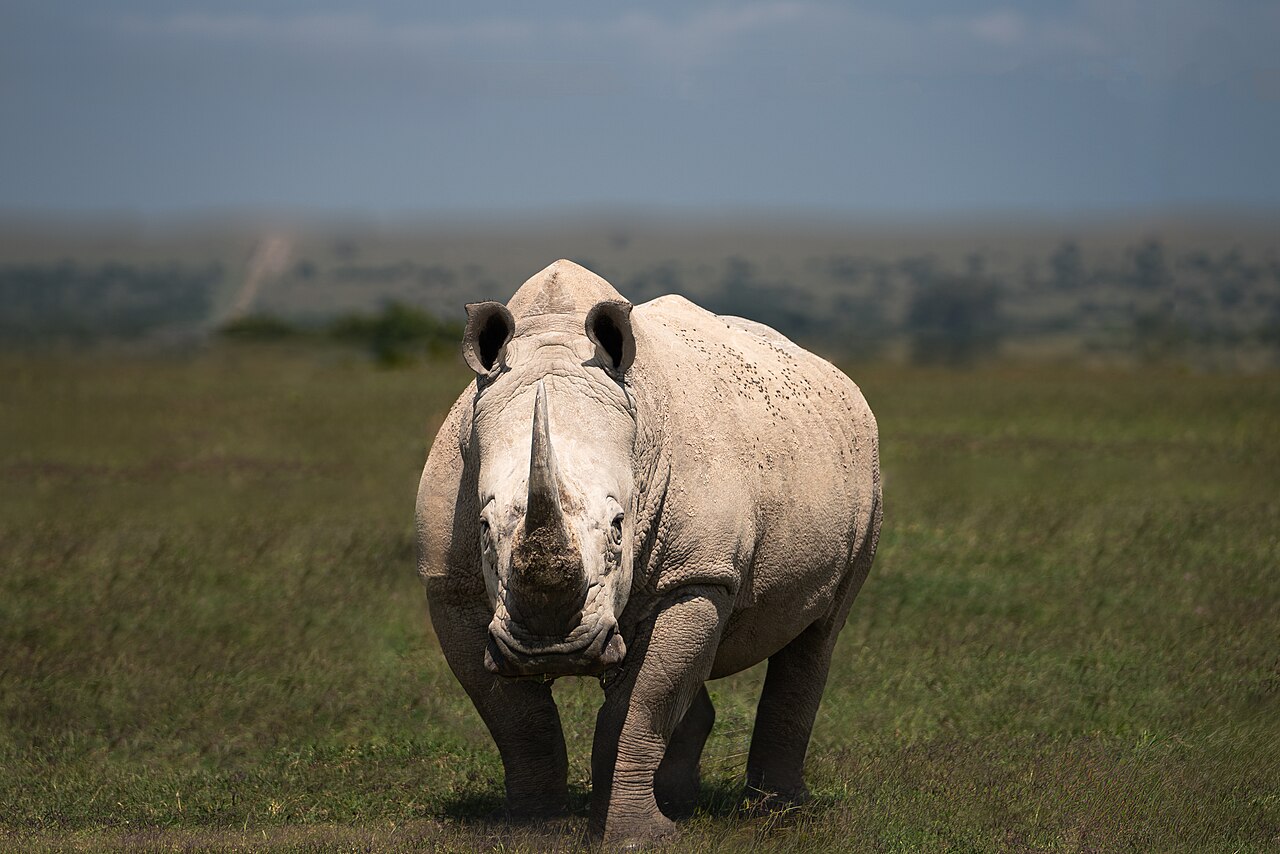
Overview
White Rhinoceros appears on the Exotic Wildlife Association species list as Rhinoceros (White) — ESA: Threatened; CITES: Appendix II. [1]
Native range
Historically, northwestern Uganda, southern Chad, south-western Sudan, the eastern part of center African Republic, and northeastern Democratic Republic of the Congo were the native places for northern white rhinoceroses ( Ceratotherium simum cottoni ). [2]
Size
1,000–3,600 kg (ADW range). [2]
Lifespan
46 to 50 years (wild, average); 39 to 43 years (wild, typical); 27 to 30 years (captivity, typical). [2]
Breeding & gestation
Gestation 530–550 days; offspring per birth: 1; females mature at 3 to 5 years. [2]
Temperament & social structure
Not verified from a primary source for this page.
Habitat needs
Typical habitat for white rhinocerose includes dense forests, savannas, and woodlands with grassy openings. ADW biomes: savanna or grassland, forest, scrub forest. [2]
Where they thrive (Texas / US)
Not verified from a primary source for this page.
Space per animal
No verified species-specific stocking rate was found. Carrying capacity depends on rainfall, range condition and competing grazers—get a range/stocking assessment (NRCS or Texas A&M AgriLife).
Housing & shelter
Not verified from a primary source for this page.
Fencing
No primary-source fencing standard was verified for this species; get containment advice from an experienced keeper or veterinarian.
Natural diet
White rhinoceroses are strictly herbivores. Their general diets include thick bush covers and short grasses. ADW diet type: herbivore, folivore. [2]
Feed & supplementation
No verified species-specific diet formulation was found for this page; follow a veterinarian or nutritionist.
Common health issues & parasites
No verified species-specific health list for this page; consult a veterinarian experienced with this species.
Vet care & vaccination
No vaccines are labeled for this species in the US; any vaccination protocol is extra-label and should be set by a veterinarian experienced with exotic hoofstock. (No specific protocol was verified for this page.)
Handling & capture
Capture myopathy—muscle damage from pursuit, restraint and transport—is often fatal in wild ungulates. Minimize chase time and stress, avoid hot conditions, use appropriate chemical immobilization by a vet, and release/unload quickly. [3]
Conservation status
IUCN Red List: Near Threatened. [4]
Legal notes (general info, not legal advice)
Listed Threatened under the US Endangered Species Act (per the EWA list; confirm current status on USFWS ECOS). Interstate sale or transport of ESA-listed animals requires federal authorization. CITES: Appendix II. General information, not legal advice. USDA APHIS licensing under the Animal Welfare Act applies to dealers and exhibitors; check USDA and your state wildlife and animal-health agencies before buying, moving or selling. [1][5][6]
Sources
- Exotic Wildlife Association – Endangered Species List (ESA status & CITES appendix)
- Animal Diversity Web (Univ. of Michigan) – Ceratotherium simum
- Breed et al. 2019, Understanding capture myopathy (Conservation Physiology, PMC6612673)
- IUCN Red List – Ceratotherium simum (assessment page)
- USFWS ECOS – Listed Animals (current ESA status)
- USDA APHIS – Animal Welfare Act licensing & registration
Figures are taken from the numbered sources; items marked "not verified" could not be confirmed from a primary source and are intentionally left blank. Husbandry guidance is general—confirm with an exotic-animal veterinarian.