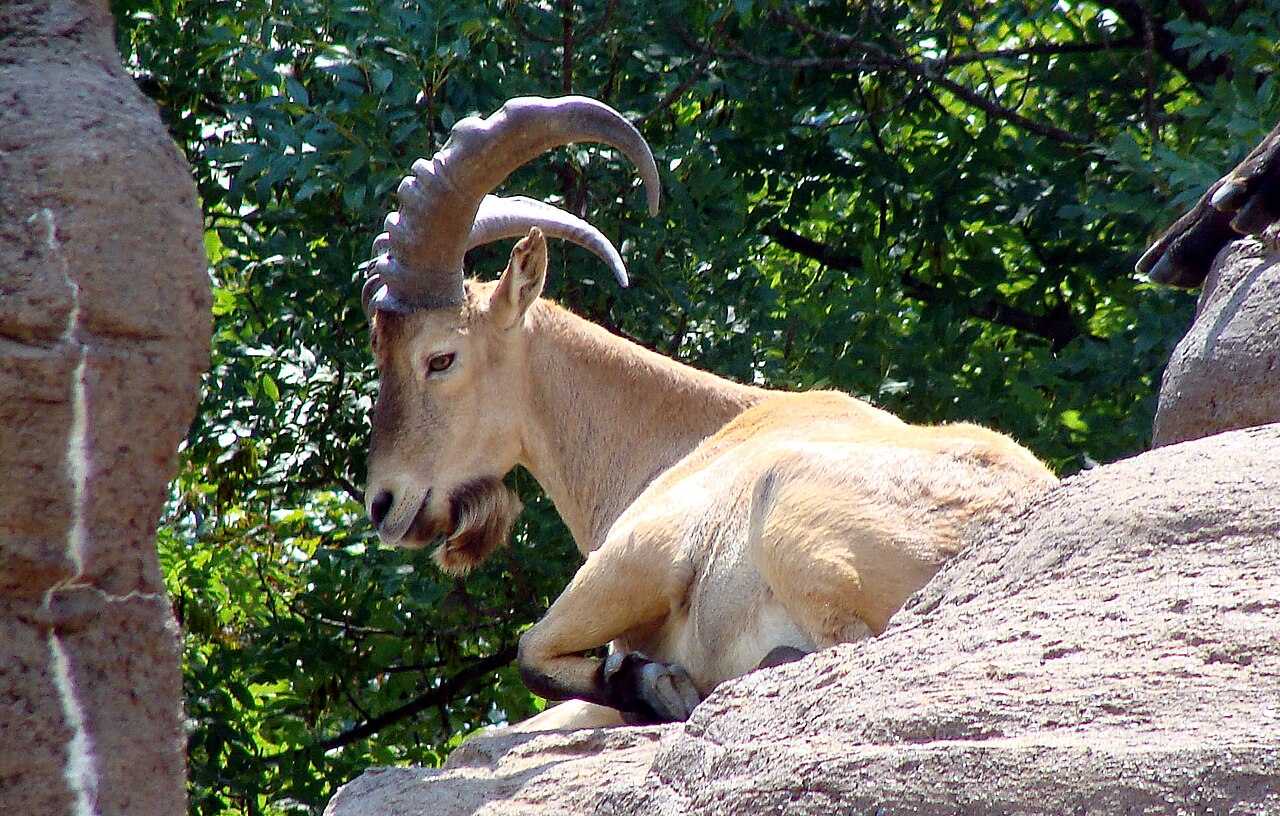
Overview
West Caucasian Tur appears on the Exotic Wildlife Association species list as Goat (Tur Caucasian) — ESA: Not Listed; CITES: Appendix II. [1]
Native range
West Caucasian turs are native only to the western Caucasus Mountains in Georgia and south-western Russia. [2]
Size
65–100 kg (ADW range). [2]
Lifespan
19.3 years (captivity, average). [2]
Breeding & gestation
Gestation 5–5.33 months; offspring per birth: 1–2. [2]
Temperament & social structure
Not verified from a primary source for this page.
Habitat needs
West Caucasian turs have one of the smallent habitats of all ungulates. They are native only to about 4,500 square kilometers in the western Caucasus Mountains. ADW biomes: mountains, taiga. [2]
Where they thrive (Texas / US)
Not verified from a primary source for this page.
Space per animal
No verified species-specific stocking rate was found. Carrying capacity depends on rainfall, range condition and competing grazers—get a range/stocking assessment (NRCS or Texas A&M AgriLife).
Housing & shelter
Not verified from a primary source for this page.
Fencing
Texas Parks & Wildlife states game fences at least 8 ft high (woven-wire or high-tensile) are the only fully reliable deer-exclusion fence. That is the common high-fence standard for deer and antelope; a species-specific minimum for this animal was not found in a primary source. [3]
Natural diet
West Caucasian turs are herbivorous. In summer their diet consists of a wide variety of plants and grasses. [2]
Feed & supplementation
No verified species-specific protein % or mineral formula was found. Texas deer guidance (16–20% CP pellet; 13–16% CP for growth/reproduction) is sometimes used as a reference point but is not antelope-specific—work with a ruminant nutritionist/exotic vet. [4][5]
Common health issues & parasites
Haemonchus contortus and Longistrongylus dominate abomasal worm burdens in free-ranging exotic antelope in Texas (sable, addax, blesbok studied); captive wild ruminants show anthelmintic resistance, so use fecal egg counts and fecal egg-count reduction tests instead of routine blanket deworming. [6][7]
Vet care & vaccination
No vaccines are labeled for this species in the US; any vaccination protocol is extra-label and should be set by a veterinarian experienced with exotic hoofstock. (No specific protocol was verified for this page.)
Handling & capture
Capture myopathy—muscle damage from pursuit, restraint and transport—is often fatal in wild ungulates. Minimize chase time and stress, avoid hot conditions, use appropriate chemical immobilization by a vet, and release/unload quickly. [8]
Conservation status
IUCN Red List: Endangered. [9]
Legal notes (general info, not legal advice)
CITES Appendix II (per the EWA list); international trade needs CITES permits. General information, not legal advice. USDA APHIS licensing under the Animal Welfare Act applies to dealers and exhibitors; check USDA and your state wildlife and animal-health agencies before buying, moving or selling. [1][10][11]
Sources
- Exotic Wildlife Association – Endangered Species List (ESA status & CITES appendix)
- Animal Diversity Web (Univ. of Michigan) – Capra caucasica
- TPWD, Local Control Methods (deer damage): 8-ft woven-wire/high-tensile game fence
- TPWD, Specific Habitat Management Practices – White-tailed Deer (16–20% protein pellet; corn 7–10% CP)
- Tomeček, Texas A&M AgriLife Extension – Deer & goat co-management (6–7% CP maintenance; 13–16% CP growth/antlers/reproduction)
- Longistrongylus/Haemonchus in free-ranging exotic antelope in Texas (J. Wildl. Dis., PubMed 8355363)
- Anthelmintic activity in captive wild ruminants by fecal egg reduction tests (J. Zoo Wildl. Med. 2000)
- Breed et al. 2019, Understanding capture myopathy (Conservation Physiology, PMC6612673)
- IUCN Red List – Capra caucasica (assessment page)
- TPWD Outdoor Annual – Nongame, Exotic & Other Species (exotic status in Texas)
- USDA APHIS – Animal Welfare Act licensing & registration
Figures are taken from the numbered sources; items marked "not verified" could not be confirmed from a primary source and are intentionally left blank. Husbandry guidance is general—confirm with an exotic-animal veterinarian.