Overview
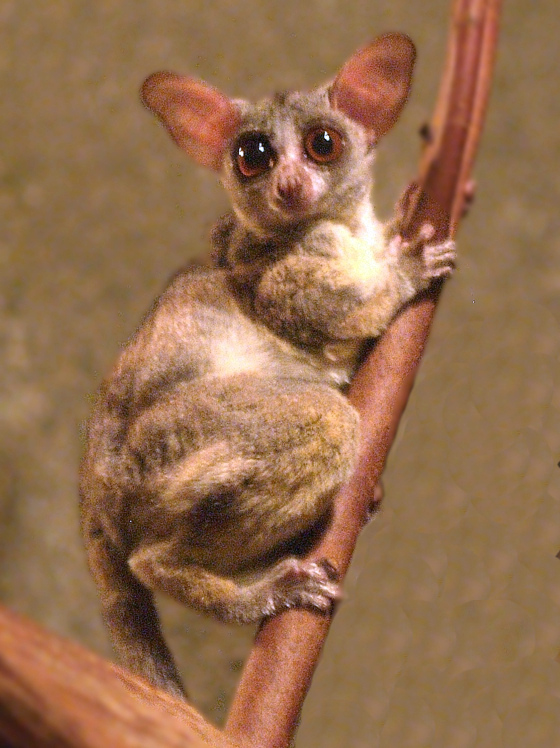
Senegal Bushbaby (Northern Lesser Galago) appears on the Exotic Wildlife Association species list as Bushbaby — ESA: Not Listed; CITES: Appendix II. [1]
Native range
Bush babies occupy the forested and bush regions of Africa south of the Sahara. Their range also extends to some nearby islands, including Zanzibar. [2]
Size
0.095–0.3 kg (ADW range). [2]
Lifespan
10 years (captivity, average); 3 to 4 years (wild, typical); 10 years (captivity, typical). [2]
Breeding & gestation
Gestation 110–120 days; offspring per birth: 1–3. [2]
Temperament & social structure
Not verified from a primary source for this page.
Habitat needs
Lesser bush babies are well-adapted to living in drier areas. They generally occupy the the savannah woodlands south of the Sahara and are excluded only from the southern tip of Africa. ADW biomes: forest, rainforest, scrub forest. [2]
Where they thrive (Texas / US)
Not verified from a primary source for this page.
Space per animal
No verified species-specific space figure was found; follow zoo/keeper enclosure guidance and consult an exotic-animal veterinarian.
Housing & shelter
Not verified from a primary source for this page.
Fencing
No primary-source containment standard was verified for this species; get enclosure design advice from an experienced keeper or zoo veterinarian.
Natural diet
Bush babies are nocturnal and arboreal feeders. Their favorite food is grasshoppers, but they will also consume small birds, eggs, fruits, seeds and flowers. ADW diet type: omnivore. [2]
Feed & supplementation
No verified diet formulation was found for this page; follow a veterinarian or zoo nutritionist.
Common health issues & parasites
No verified species-specific health list for this page; consult an exotic-animal veterinarian.
Vet care & vaccination
No vaccines are labeled for this species in the US; set any protocol with an exotic-animal veterinarian. (No specific protocol was verified for this page.)
Handling & capture
Capture/restraint protocol not verified for this species; have an experienced exotic-animal veterinarian plan any capture or transport.
Conservation status
IUCN Red List: Least Concern. [3]
Legal notes (general info, not legal advice)
CITES Appendix II (per the EWA list); international trade needs CITES permits. General information, not legal advice. USDA APHIS licensing under the Animal Welfare Act applies to dealers and exhibitors; check USDA and your state wildlife and animal-health agencies before buying, moving or selling. [1][4]
Sources
- Exotic Wildlife Association – Endangered Species List (ESA status & CITES appendix)
- Animal Diversity Web (Univ. of Michigan) – Galago senegalensis
- IUCN Red List – Galago senegalensis (assessment page)
- USDA APHIS – Animal Welfare Act licensing & registration
Figures are taken from the numbered sources; items marked "not verified" could not be confirmed from a primary source and are intentionally left blank. Husbandry guidance is general—confirm with an exotic-animal veterinarian.