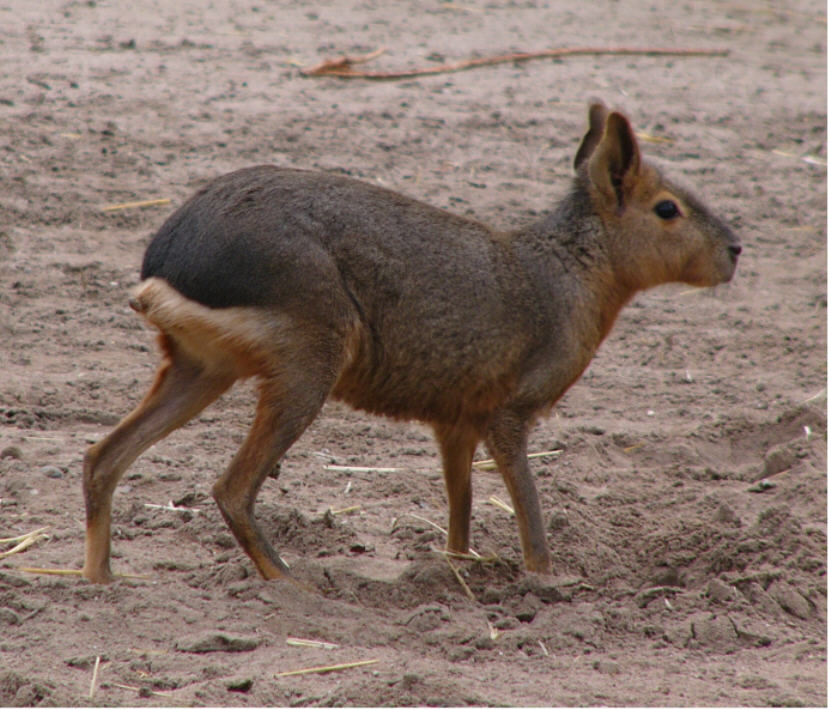
Overview
Patagonian Mara (Patagonian Cavy) appears on the Exotic Wildlife Association species list as Patagonian Cavy — ESA: Not Listed; CITES: Appendix II. [1]
Native range
Dolichotis patagonum is endemic to the open grasslands and shrubland steppes of Argentina, and is distributed between 28°S and 50°S. [2]
Size
Average 8.12 kg (ADW range). [2]
Lifespan
14 years (captivity, average). [2]
Breeding & gestation
Gestation 9111 days; average 100 days; offspring per birth: 1–3; females mature at 8 months. [2]
Temperament & social structure
Not verified from a primary source for this page.
Habitat needs
Patagonian maras live only in the arid central and southern regions of Argentina. Generally classified as desert, this area exhibits a wide range of distinct microhabitats ranging from sandy plains to thorny shrubland steppes. ADW biomes: desert or dune, savanna or grassland, scrub forest. [2]
Where they thrive (Texas / US)
Not verified from a primary source for this page.
Space per animal
No verified species-specific space figure was found; follow zoo/keeper enclosure guidance and consult an exotic-animal veterinarian.
Housing & shelter
Not verified from a primary source for this page.
Fencing
No primary-source containment standard was verified for this species; get enclosure design advice from an experienced keeper or zoo veterinarian.
Natural diet
ADW diet type: herbivore, folivore, coprophage. [2]
Feed & supplementation
No verified diet formulation was found for this page; follow a veterinarian or zoo nutritionist.
Common health issues & parasites
No verified species-specific health list for this page; consult an exotic-animal veterinarian.
Vet care & vaccination
No vaccines are labeled for this species in the US; set any protocol with an exotic-animal veterinarian. (No specific protocol was verified for this page.)
Handling & capture
Capture/restraint protocol not verified for this species; have an experienced exotic-animal veterinarian plan any capture or transport.
Conservation status
IUCN Red List: Near Threatened. [3]
Legal notes (general info, not legal advice)
CITES Appendix II (per the EWA list); international trade needs CITES permits. General information, not legal advice. USDA APHIS licensing under the Animal Welfare Act applies to dealers and exhibitors; check USDA and your state wildlife and animal-health agencies before buying, moving or selling. [1][4]
Sources
- Exotic Wildlife Association – Endangered Species List (ESA status & CITES appendix)
- Animal Diversity Web (Univ. of Michigan) – Dolichotis patagonum
- IUCN Red List – Dolichotis patagonum (assessment page)
- USDA APHIS – Animal Welfare Act licensing & registration
Figures are taken from the numbered sources; items marked "not verified" could not be confirmed from a primary source and are intentionally left blank. Husbandry guidance is general—confirm with an exotic-animal veterinarian.