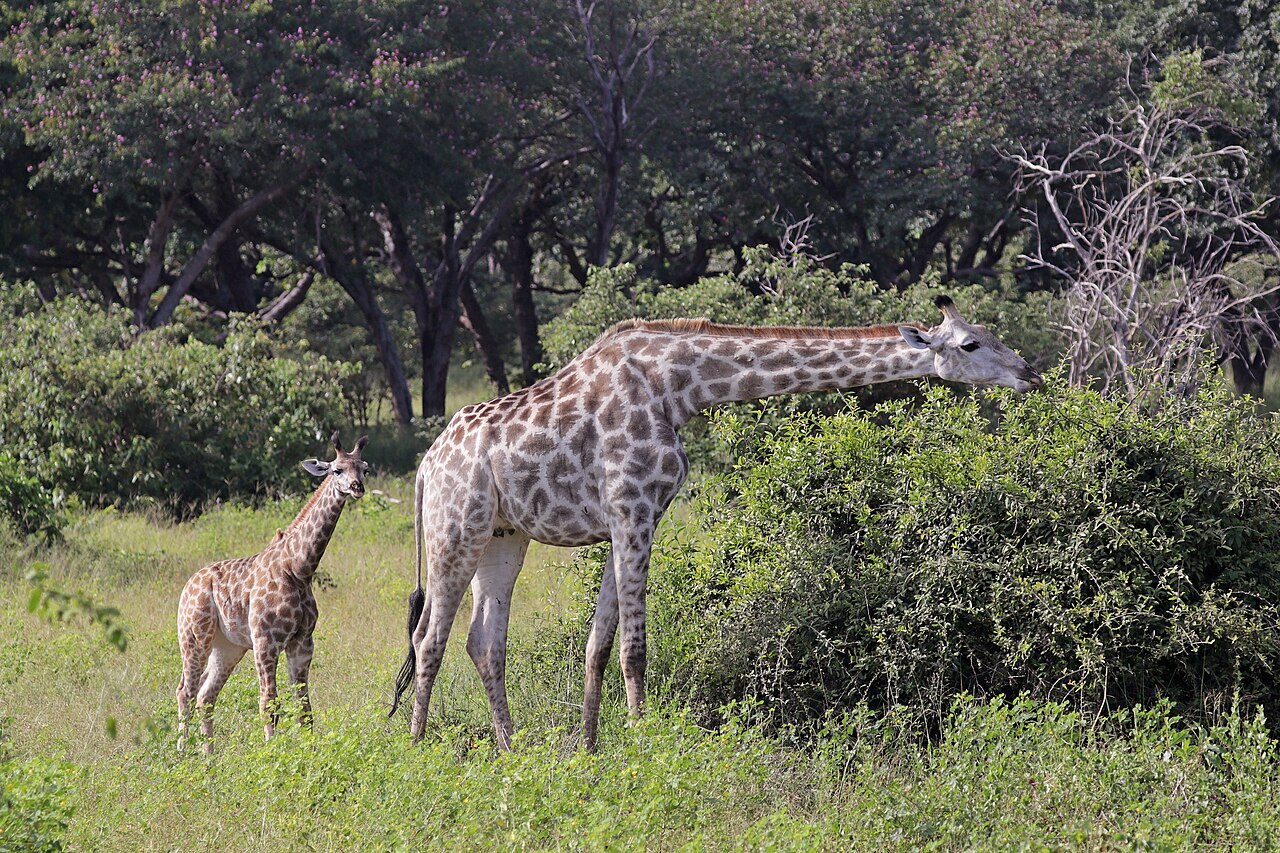
Overview
Tallest land animal; needs specialist husbandry, especially for cold weather. [1]
Native range
Sub-Saharan Africa. [1]
Size
Bulls up to 1,930 kg, cows up to 1,180 kg; 4.7–5.7 m tall; calves 50–55 kg. [1]
Lifespan
10–15 years wild; 20–25 years captive (record 27). [1]
Breeding & gestation
~457 days (range 400–468); females breed every 20–30 months; weaning 12–16 months. [1]
Temperament & social structure
Loose herds; females mature at 3–4 years, males breed from ~7 years. [1]
Habitat needs
Open savanna/woodland with browse. [1]
Where they thrive (Texas / US)
Suitable anywhere in Texas only with a heated barn: AZA/USDA call for heated housing when temperatures average below 50 °F (inference: this occurs statewide in winter). See the interactive Texas species map (../site/map.html). [2][3]
Space per animal
No verified species-specific stocking rate was found. Carrying capacity depends on rainfall, range condition and competing grazers—get a range/stocking assessment (NRCS or Texas A&M AgriLife).
Housing & shelter
AZA: when average daily temperatures fall below 10 °C (50 °F), provide heated housing that holds at least 18 °C (65 °F), with areas near 24 °C (75 °F); measure at chest height of the smallest giraffe. USDA recommends keeping giraffes indoors in cold, inclement weather; a giraffe died in a drafty barn that was ~70°F up high but 45°F lower down. Acclimatized giraffes tolerate heat up to 49 °C (120 °F) with shade. [2][3]
Fencing
Follow the AZA Giraffe Care Manual for barrier and barn design; no ranch fence-height figure was verified for this page. [2]
Natural diet
Browser; an adult male can eat up to 66 kg of food per day, surviving on ~7 kg in poor areas. [1]
Feed & supplementation
Follow the AZA Giraffe Care Manual nutrition chapter; no protein % was verified for this page. [2]
Common health issues & parasites
Cold stress/hypothermia is a major documented killer; once chilled, a giraffe struggles to regain body temperature without an outside heat source, and its immune system is compromised. Calves and juveniles are at greatest risk. [3]
Vet care & vaccination
No vaccines are labeled for this species in the US; any vaccination protocol is extra-label and should be set by a veterinarian experienced with exotic hoofstock. (No specific protocol was verified for this page.)
Handling & capture
Capture myopathy—muscle damage from pursuit, restraint and transport—is often fatal in wild ungulates. Minimize chase time and stress, avoid hot conditions, use appropriate chemical immobilization by a vet, and release/unload quickly. [4]
Conservation status
IUCN Red List: Vulnerable. [5]
Legal notes (general info, not legal advice)
A USDA AWA exhibitor license is required if exhibited to the public. General information, not legal advice. USDA APHIS licensing under the Animal Welfare Act applies to dealers and exhibitors; check USDA and your state wildlife and animal-health agencies before buying, moving or selling. [6]
Sources
- Animal Diversity Web (Univ. of Michigan) – Giraffa camelopardalis
- AZA Giraffe Care Manual (2025)
- USDA Animal Care tech note – Proper Giraffe Care in Cold Weather
- Breed et al. 2019, Understanding capture myopathy (Conservation Physiology, PMC6612673)
- IUCN Red List – Giraffa camelopardalis (assessment page)
- USDA APHIS – Animal Welfare Act licensing & registration
Figures are taken from the numbered sources; items marked "not verified" could not be confirmed from a primary source and are intentionally left blank. Husbandry guidance is general—confirm with an exotic-animal veterinarian.