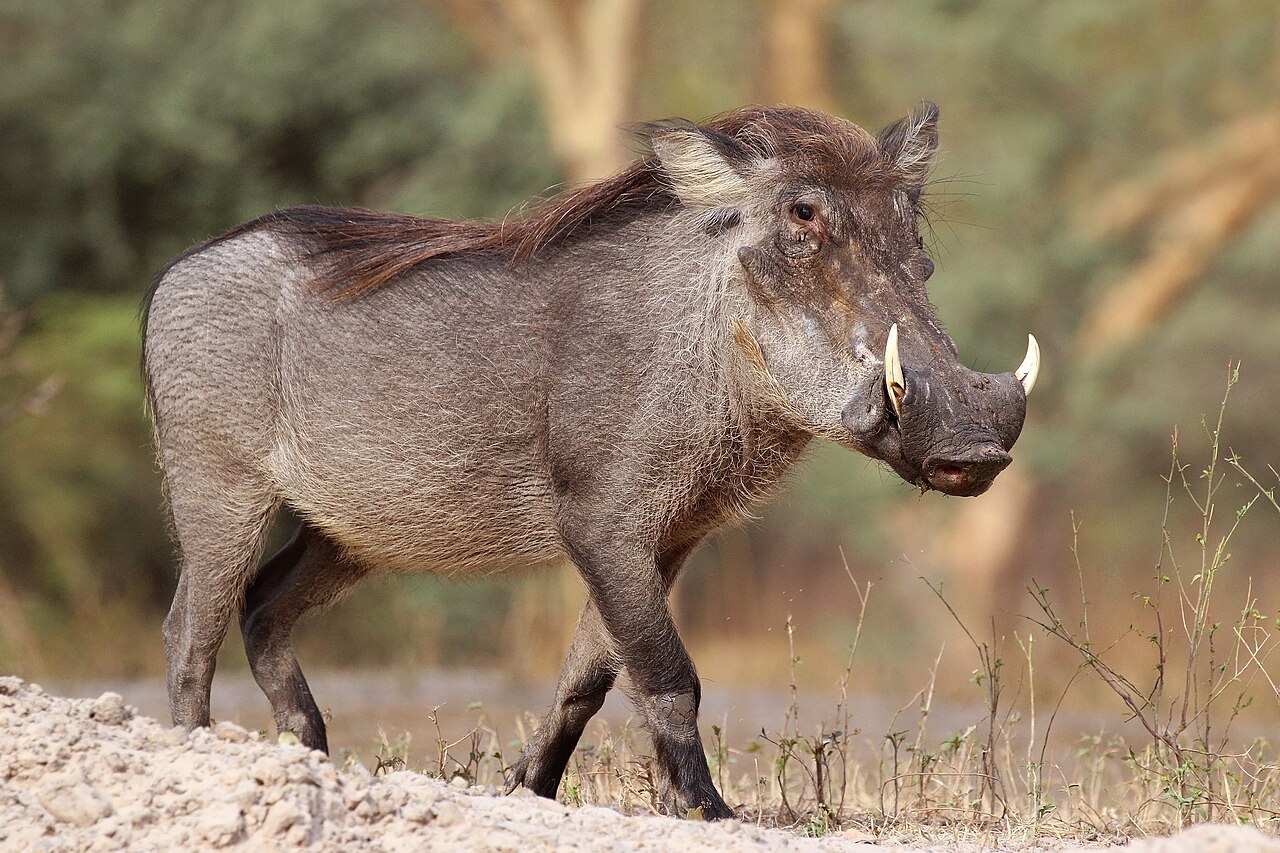
Overview
Common Warthog appears on the Exotic Wildlife Association species list as Hog (Warthog) — ESA: Not Listed; CITES: N/A. [1]
Native range
Warthogs ( Phacochoerus africanus ) are found outside forested areas in Africa, from Mauritania to Ethiopia and south to Namibia and eastern South Africa. [2]
Size
50–150 kg (ADW range). [2]
Lifespan
15 to 18 years (wild, range); 7 to 11 years (wild, typical); 20.9 years (captivity, average). [2]
Breeding & gestation
Gestation 170–175 days; average 172 days; offspring per birth: 1–7; females mature at 18 to 20 months. [2]
Temperament & social structure
Not verified from a primary source for this page.
Habitat needs
Common warthogs are found in open and wooded savannas, grass-steppes, and semi-deserts in Africa. ADW biomes: savanna or grassland. Elevation range 0–3000 m. [2]
Where they thrive (Texas / US)
Not verified from a primary source for this page.
Space per animal
No verified species-specific stocking rate was found. Carrying capacity depends on rainfall, range condition and competing grazers—get a range/stocking assessment (NRCS or Texas A&M AgriLife).
Housing & shelter
Not verified from a primary source for this page.
Fencing
No primary-source fencing standard was verified for this species; get containment advice from an experienced keeper or veterinarian.
Natural diet
Common warthogs are primarily grazers but also feed on roots, berries, bark of young trees, and occassionaly carrion. ADW diet type: omnivore. [2]
Feed & supplementation
No verified species-specific diet formulation was found for this page; follow a veterinarian or nutritionist.
Common health issues & parasites
No verified species-specific health list for this page; consult a veterinarian experienced with this species.
Vet care & vaccination
No vaccines are labeled for this species in the US; any vaccination protocol is extra-label and should be set by a veterinarian experienced with exotic hoofstock. (No specific protocol was verified for this page.)
Handling & capture
Capture myopathy—muscle damage from pursuit, restraint and transport—is often fatal in wild ungulates. Minimize chase time and stress, avoid hot conditions, use appropriate chemical immobilization by a vet, and release/unload quickly. [3]
Conservation status
IUCN Red List: Least Concern. [4]
Legal notes (general info, not legal advice)
General information, not legal advice. USDA APHIS licensing under the Animal Welfare Act applies to dealers and exhibitors; check USDA and your state wildlife and animal-health agencies before buying, moving or selling. [5][6]
Sources
- Exotic Wildlife Association – Endangered Species List (ESA status & CITES appendix)
- Animal Diversity Web (Univ. of Michigan) – Phacochoerus africanus
- Breed et al. 2019, Understanding capture myopathy (Conservation Physiology, PMC6612673)
- IUCN Red List – Phacochoerus africanus (assessment page)
- TPWD Outdoor Annual – Nongame, Exotic & Other Species (exotic status in Texas)
- USDA APHIS – Animal Welfare Act licensing & registration
Figures are taken from the numbered sources; items marked "not verified" could not be confirmed from a primary source and are intentionally left blank. Husbandry guidance is general—confirm with an exotic-animal veterinarian.